
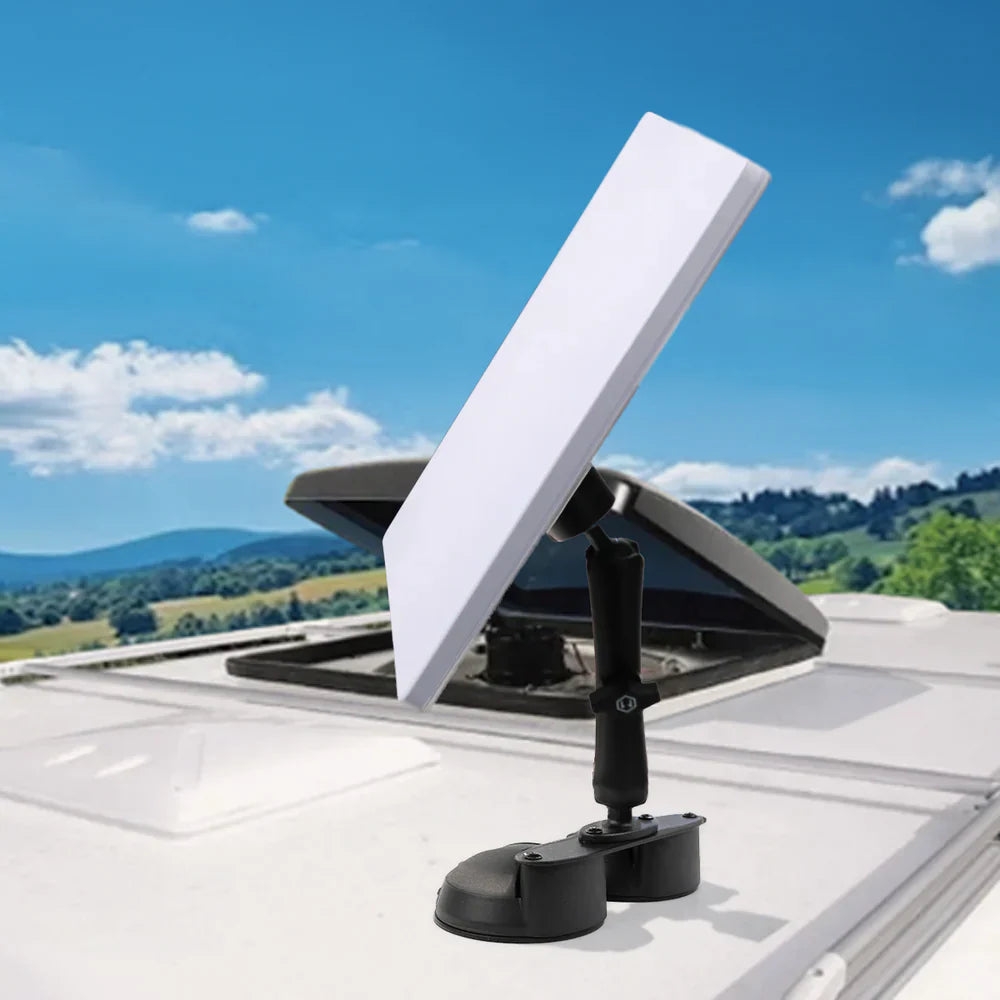
Every Starlink Mini owner eventually hits the same fork in the road: you've got the dish, you've got the destination, and now you need something to physically hold the two together. Search "Starlink mount" and you'll find a flood of options, but two designs consistently rise to the top for vehicle-based setups — triple suction and dual suction. They look similar at a glance. They are not the same product, and picking the wrong one means either overpaying for stability you don't need or undershooting the stability your setup actually requires.
Here's the honest breakdown.
What They Have in Common?
Both the Triple Suction Mount and the Dual Suction Mount attach to glass — windshields, rear windows, side panels — without drilling, adhesives, or permanent modification. Both install without special tools. Both are designed specifically around the size and weight profile of the Starlink Mini terminal, not repurposed phone-mount hardware that happens to sort of fit. And both come from the same design philosophy: satellite internet should be easy to deploy, not a project.
That's where the similarities end.
Triple Suction: Built for Stability Under Load
The triple suction system distributes contact across three points instead of two, which does two things a dual-cup design can't match. First, it dramatically reduces the pivot effect — the tendency of a mounted object to rock or tilt when the vehicle hits uneven ground. Second, it spreads the holding force across a wider surface area, which means each individual suction point is under less strain, and less strain means less chance of gradual slippage over a long drive.

This is the mount you want if:
-
You're driving on unpaved or rough terrain regularly (overlanding, off-road, rural routes)
-
The mount will stay attached for extended periods — days or weeks, not hours
-
You're prioritizing signal consistency over quick removal
-
Your vehicle sees real vibration — trucks, vans, off-road-capable SUVs
Dual Suction: Built for Speed and Flexibility
Dual Suction Mount trades some of that raw stability for something else entirely: speed. It's a quick-lock design, meaning you can attach and detach it in seconds rather than minutes. That matters a lot more than it sounds like once you're actually living the use case — think campground stopovers where you only need connectivity for a couple hours, or travelers who move locations daily and don't want to spend ten minutes on setup and ten more on breakdown every single time.

This is the mount you want if:
-
You need to reposition frequently — different windows, different vehicles, different days
-
Your trips are shorter stops rather than long stationary stretches
-
You're prioritizing portability and ease of use over maximum stability
-
Your driving conditions are mostly smooth roads and highways
It's not that the dual suction mount is "less" of a product — it's built for a different job. Asking it to do the triple mount's job (rough terrain, long-term attachment) is where people run into trouble. Asking the triple mount to do the dual's job (quick, frequent repositioning) works fine, but it's more mount than you need if speed is your priority.
A Side-by-Side Way to Think About It
|
Triple Suction |
Dual Suction |
|
|
Best for |
Long-haul stability, rough terrain |
Fast setup, frequent moves |
|
Install speed |
Moderate |
Very fast (quick-lock) |
|
Vibration resistance |
Highest |
Good for lighter use |
|
Ideal user |
Van lifers, overlanders, field crews |
Travelers, weekend trips, temporary setups |
|
Terrain suited for |
Off-road, gravel, sustained rough driving |
Highways, paved roads, short stints |
The Question That Actually Decides It
Don't ask "which mount is better." Ask: how long will this dish stay mounted, and on what kind of road?
If the answer is "attached for days at a time, on terrain that shakes the whole vehicle" — go triple. If the answer is "on and off multiple times a week, mostly smooth driving" — go dual. Buying the wrong one doesn't mean the mount is bad, it means the mount and the use case don't match, and that mismatch is what leads to the reviews you see online complaining about slippage or awkward installs. Match the mount to the trip, and both of these hold up exactly as designed.
Why It's Worth Getting This Right?
A Starlink Mini terminal isn't cheap, and neither is the frustration of losing signal mid-workday because a mount wasn't rated for what you were asking it to do. Getting the mount right the first time means you stop thinking about your internet connection at all — which, when you're hours from the nearest cell tower, is exactly the point.