
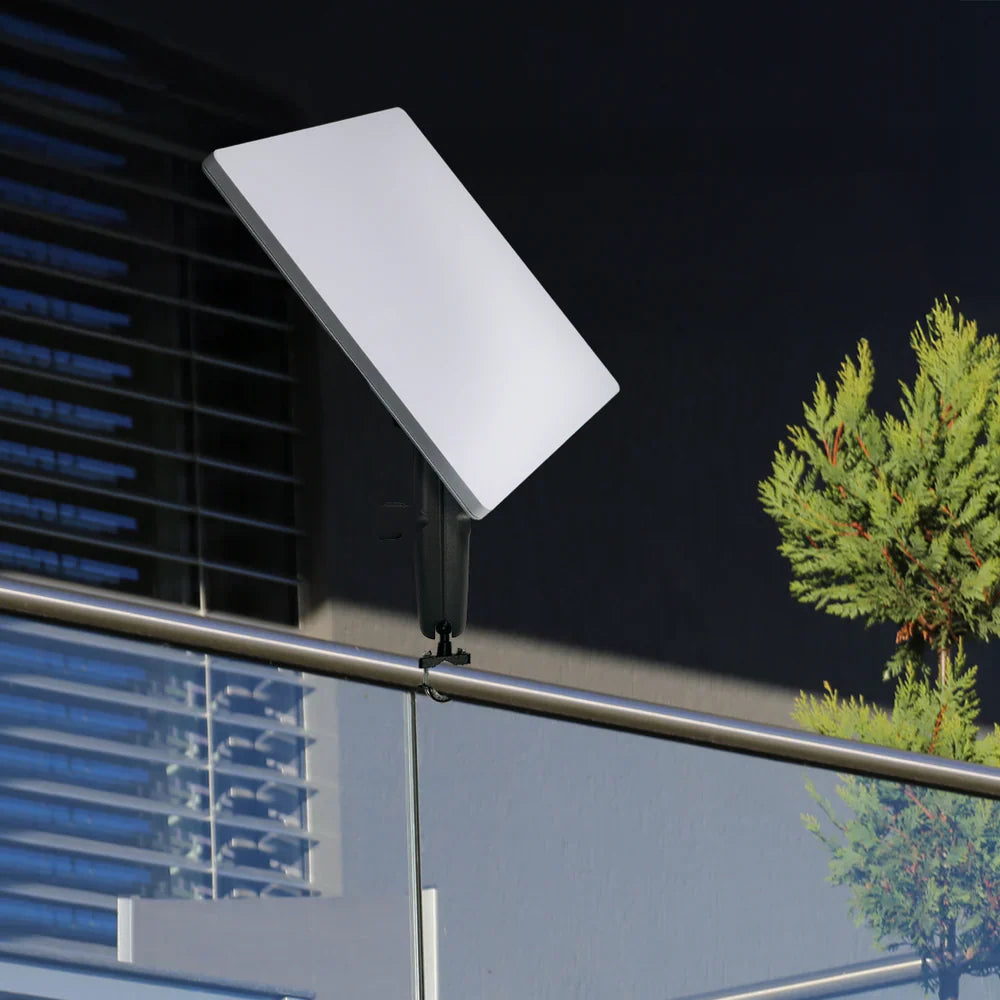
Not every Starlink setup involves a vehicle windshield or a desk. Some of the most demanding use cases for satellite internet happen where there's no glass, no flat surface, and no dashboard in sight — just a handlebar, a rail, a pole, or a piece of ATV frame. Search and rescue teams setting up comms in the backcountry. Hunters and campers who need connectivity at a site with zero infrastructure. Adventure motorcyclists staying connected on multi-day routes through dead zones. For all of these, the mounting question isn't "which suction cup" — it's "what do I even clamp this to?"
That's exactly the gap our handlebar mounting systems are built to close.
When Suction and Magnets Aren't the Answer?
Suction mounts need glass. Magnetic mounts need steel. Neither one helps you if what you're working with is a round tube — a bike handlebar, an ATV roll cage, a fence rail, a tent pole, a boat railing. For that category of surface, you need a mechanical clamp system, not adhesion or magnetism, and that changes the entire design requirement. A clamp has to grip tight enough to survive constant vibration and rough handling, without crushing or damaging whatever it's attached to, and it has to hold its position through hours of continuous outdoor use in conditions that are, by definition, rugged.

Handlebar Mount: Maximum Grip for Continuous Outdoor Use
Our Handlebar Mount is built for exactly this scenario — a clamp-based attachment system designed to grip bikes, ATVs, poles, and rails with the kind of mechanical hold that doesn't loosen over time or under load. This is the option for setups where the mount goes on once and stays on for the duration of an extended outdoor deployment: a multi-day backcountry trip, a semi-permanent field camp, a research station that isn't moving anytime soon.
Best suited for:
-
ATV and off-road vehicle setups where a suction or magnetic mount has nowhere reliable to attach
-
Bike-based mobile setups — increasingly common among long-distance cyclists and bikepackers who want connectivity without carrying a dedicated hotspot
-
Fixed outdoor installations on poles, rails, or fencing at remote camps, job sites, or research locations
-
Any surface where durability under continuous outdoor exposure matters more than quick removal
Quick Handlebar Mount: The Same Idea, Built for Speed
If your priority is flexibility over maximum permanence, the Quick Handlebar Mount gives you the same clamp-based versatility with a tool-free installation system built for fast attachment and removal. This is the choice for users who are moving between locations often — repositioning from a bike to a fence post to a tent pole over the course of a single trip — and don't want to fight with hardware every time they relocate.
Best suited for:
-
Travelers and adventurers who need to reposition their Starlink setup multiple times per trip
-
Multi-use scenarios — the same mount moving between a bike, a rail, and a temporary camp setup
-
Anyone prioritizing speed and convenience without giving up a genuinely secure hold
Choosing Between the Two
The decision comes down to the same question as any mount choice: how long is this staying put, and how often does it need to move? If you're setting up once for a sustained deployment — a hunting camp for the week, a fixed research post, a long-haul bikepacking rig you won't be reconfiguring daily — the standard Handlebar Mount's clamp system gives you the most durable, set-it-and-forget-it hold. If you're moving locations constantly and need to detach and reattach without friction, the Quick Handlebar Mount trades a small amount of that maximum grip for meaningfully faster setup and breakdown.
Why Rugged Environments Demand Purpose-Built Hardware

It's tempting to improvise — zip ties, bungee cords, whatever's in the truck. But Starlink Mini is a precision instrument that needs a stable, consistent angle to maintain signal, and improvised mounting almost always means an improvised, unreliable connection. A clamp system engineered specifically for this job holds its grip through vibration, weather, and rough handling in a way that a bungee cord never will — and it means the actual point of bringing satellite internet into the backcountry (staying connected) doesn't get undone by the one part of the setup nobody thought to plan for.